Your Genes, Your Health
Bad Cholesterol
Apr 12th
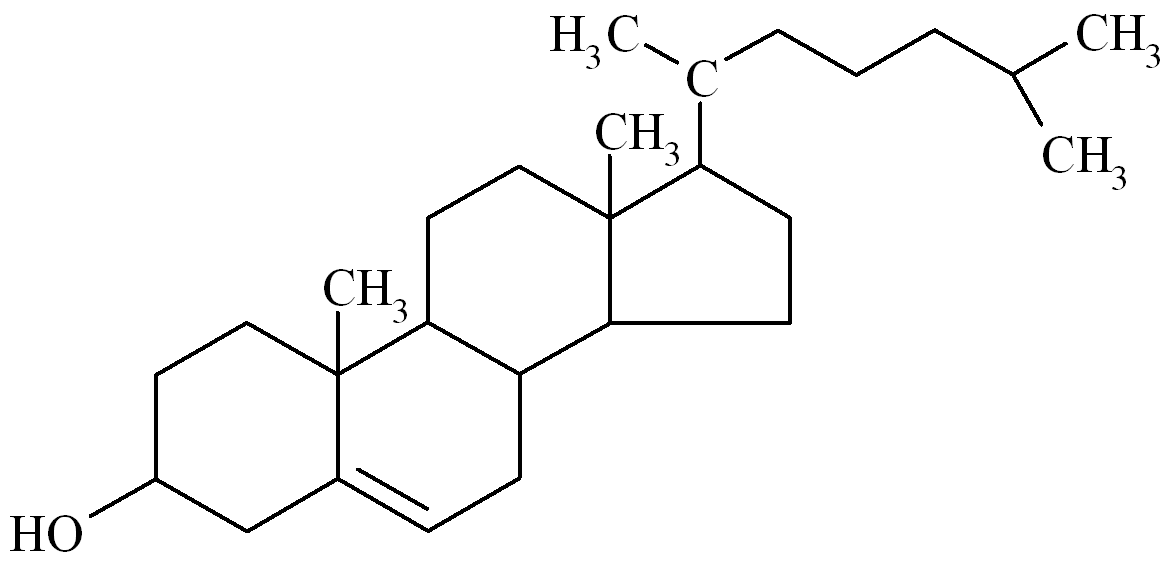
When someone mentions cholesterol many will say, how is your HDL? Cholesterol travels through the blood attached to lipoproteins. From a health prospective we try to maintain the good cholesterol (High density lipoproteins or HDL) and decrease the bad cholesterol (Low density lipoproteins or LDL). The HDL aids the body in removal of bad cholesterol in the blood whereas LDL causes build up of plaque within arteries restricting blood flow and hardening of the arteries that may result in heart disease. Control of cholesterol levels is through a number of ways such as low cholesterol diets, weight loss and drugs.
Cholesterol More >
Guts against Diabetes
Mar 21st
For a very long time I have been using Diabetes as an example of a disorder that is caused by a mutation in the insulin gene. This mutation would stop the cells from making insulin, and a diabetic might need daily insulin injections to regulate their sugar levels properly. I don’t know what took me so long to realize that this was completely wrong. That while some diabetics are insulin dependent, it is because their insulin-producing cells of the pancreas are being completely destroyed by the immune system. And while they still aren’t sure about why these cells are being More >

Evolution – Got Milk?
Feb 17th
After asking students during a lesson on mutations if it is possible that a mutation in DNA could be good, most students will nod yes without much understanding. Recently, I finally had one student raise his hand immediately and answer the question (with extreme surprise that no other students were blurting out the answer)…”evolution!” He was able to make the connection between changes in DNA that are building up over time, and how that change can possibly make that organism better in some way. If it helps the survival of an organism, that mutation is going to stick around and More >

Controlling gene expression through diet
Feb 16th
Epigenetics is the study of chemical reactions that control the on and off switch of genes at specific times and the factors influencing them. Environment is a factor that influences epigenetic change which may encompass behavior, stress or diet. The easiest of the three to make observations from is diet. When we think of food, rarely do we think of chemical modifications to DNA and restriction of gene activity. Commonly we think of foods coming in and being broken down into nutrients to be utilized in metabolic pathways to make components the body can use. Interestingly one of the pathways More >
Tag…You’re It!
Jan 19th
Classic genetics alone is unable to explain the diversity we see within a population of living things. This also cannot explain how identical twins with the same DNA sequences can have differences in their traits and development of disease. First introduced in 1939 by C.H. Waddington, epigenetics is now able to offer some explanation, as it studies the heritable changes in gene expression that are not due to any alteration in the DNA sequence.
This may help to answer many questions. How can we have so many different types of cells and they all carry the same genetic information? How is More >

Traveling Genomes
Jan 3rd
Many individuals are concerned with the dietary components of foods they consume. However, scientists from Nanjing University in China have given us a different perspective as to what we eat, they have discovered fragments of genetic material known as microRNAs making their way from vegetables into the human bloodstream.” (Stanley 2011)
MicroRNAs are found abundantly in humans and regulate gene activity through repression mechanisms. But to find microRNAs from plants still thriving post digestion was quite surprising. Even more shocking it was identified that fragments of these plant genomes come with consequences. Scientists revealed one such microRNA molecule, called MIR168a—which is More >
Merry Christmas to Hemophilia Patients
Dec 15th
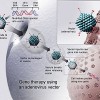
Gene therapy is a technique that offers the potential to replace defective copies of genes in any genetic disease with an intact version. While the idea of this treatment sounds alluring, the actual practice of it is a whole other story. There are a few drawbacks to this technique that must be considered, including the potential risk of an immune response because the gene is inserted with the use of a virus, which the immune system will see as foreign. Also, most patients so far have needed multiple treatments over the course of their lifetime, estimating to cost much more More >

Trying to unlock a new door…..
Nov 28th
How is drug development moving along? Well, this is a very good question for we are still plagued by some elusive diseases, cancer for example. There have been many drugs developed targeting proteins involved in disease states some of which have proven to be quite effective. However today the steam engine for identifying drug targets to proteins involved in disease is becoming ever more difficult. Apparently over the past decade or so, the number of new drugs targeted toward disease has declined. This is primarily due to the fact that developing new medicine has become more difficult to do. It More >

One Size Does Not Fit All
Nov 11th
In 1994, there were more than 2.2 million serious medical cases, and over 100,000 deaths from negative reactions to prescribed drugs. (NCBI) These numbers have made adverse drug reactions one of the leading causes of hospitalization and deaths in the US. Currently, there is no easy way to determine how a patient is going to respond to a medication, so pharmaceutical companies are relying on a “one size fits all” policy. But as we can see with the amount of hospitalizations and deaths each year, there has to be a better way. One area that is shedding hope on this More >

The Medical Sleuth
Oct 31st
When we think of a detective the first thing that comes to mind is an investigator, either a member of a police agency or a private entity. However there are unique detectives within the multifaceted arena of medicine. All though we might already think of most doctors as detectives there are special doctors, units, working at the National Institute of Health’s (NIH) undiagnosed disease program. Doctors such as William A. Gahl at the NIH are disease detectives that try to elucidate the causes and genetic basis involved in the hundreds of unsolved and mysterious diseases that arise each year. Dr. Gahl More >