Inside Cancer

Jumping Down the Road to Cancer.
Aug 28th
Lying dormant in our genomes are millions of jumping genes. Originally discovered by Barbara McClintock, transposons are DNA sequences that can move from one location to another in our DNA. Transposons cause mutations when they jump to new locations, so keeping them from jumping is important. However, although transposons are largely silent, every person probably has a few “rare” sites, found in only a few people in the world, where a transposon has jumped to a new location.
Mutations in numerous pathways need to accumulate for cancer to progress. Given the ability of transposons to cause mutation and the role of mutation in More >

Can a moisturizer treat cancer?
Aug 17th
How often do you moisturize your skin? Every day? Once a month? Well researchers at Northwestern University in Chicago have given a moisturizer the ability to perform RNA interference and regulate genes.
Topical treatments are common for skin cancers like melanoma, as they can be applied directly to the affected cells. But our skin is very effective at blocking toxins getting into our bodies so the challenge was how to cross that barrier.
Again, enter the realm of nanotechnology, a topic I post about regularly.
This time, the scientists paired gold nanoparticles with small interfering RNA (siRNA) molecules to form a siRNA “sphere.” These miniscule More >

Online Graduate Education in Biotechnology
Jul 6th
I recently blogged about harnessing the power of bioinformatics for cancer research. An interested reader, Linda Zabriske, commented that the blogosphere (and government organizations such as the Bureau of Labor Statistics) has been gradually filling with talk about cancer research and its role in our future. Linda’s tool, the Online Graduate Programs, collates some of these articles and ideas and she’s co-written this month’s post with me, reflecting on Online Graduate Education in Biotechnology.
In past decades, the field of biological science and engineering were considered separate and distinct. Biology dealt with the complexities and wonders of humans, animals and plants, More >
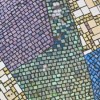
When is a clone not a clone? When it’s a mosaic.
Apr 27th
Tumor cells are a mosaic of different cell types
For the last decade or so, progressive cancer treatments involved taking samples of tumors, testing the cells to determine the genetic makeup, and then prescribing medicines targeted to specific mutations. There are many benefits to this approach, but it doesn’t always work.
It turns out that tumors aren’t uniform; they are mosaics of cells that can be genetically very different. A recent paper in the New England Journal of Medicine showed that a cell in one area may not be the same as a call in another area (a phenomenon called “intratumor heterogeneity”). So More >
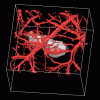
Finding Cancer: Can you hear the light?
Apr 4th
Finding cancers early allows for more effective treatment with the least side effects, so finding better ways to detect cancers is an important part of the fight. A new technique may help us “hear” where cancers are, allowing doctors to diagnose cancers more precisely than is currently possible. The technique, which is called photoacoustic tomography, takes pictures of sound waves that come from tissues when laser light is shined on the tissue. This is possible because different parts of the body absorb different amounts of light. When light is absorbed, it raises the temperature of the tissue, and the temperature More >

Future Nobel Prize-winning cancer researchers?
Mar 19th
What did you do for your science fair this year? Or last year? Or 20 years ago?
Recently three high school students took out top honors in science fairs for their projects involving cancer research:
- Angela Zhang from California developed nanotechnology to destroy cancer stem cells and win the 2011 Siemens Competition in Math, Science & Technology;
- Shree Bose from Texas discovered a protein that could help prevent resistance to chemotherapy to take out first prize in the first International Google Science Fair; and
- Michigan native Nithin Tumma won the 2012 Intel Science Talent Search with his investigation of molecular pathways to compare breast cancer More >

Exhausting Our Lungs
Mar 7th
I have often wondered what impact the diesel fumes from yellow school buses might have on students. I know that I don’t like driving behind those buses because the fumes don’t smell good, so it seemed to me that there might be some health consequences. Others have wondered, too, and there is evidence that exhaust levels in buses can have health effects. However, it is hard to study this sort of thing, because finding people that are exposed to high levels of diesel in a controlled environment over long enough periods to measure the effects is challenging. Now, a study More >
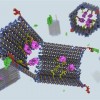
What do you get when you cross an immunologist, a nanotechnologist, and a geneticist? A DNA nano-robot!
Feb 17th
Welcome to the world of nanobiotechnology and translational research…
In a brilliant example of multidisciplinary research, Harvard Medical School’s Shawn Douglas, Ido Bachelet, and George Church combined forces to build nanostructures that would mimic the body’s immune system to recognize cancer cells and trick them into self-destructing. Their research is published today in Science but the discovery didn’t just happen overnight. It’s the culmination of several key discoveries going back several years, by researchers around the globe.
In 2006, Paul Rothemund at the California Institute of Technology, discovered “DNA origami,” where the Watson-Crick base-pairing rules are exploited to create molecules from viral DNA More >

Tumor Treatment: Whether to Shrink or Not to Shrink
Feb 6th
Just like normal tissue, tumors need blood vessels to grow. Because of this, drugs that stop angiogenesis, or the formation of new blood vessels, are one important approach to treating cancers. These angiogenesis inhibitors stop tumor growth by starving them of oxygen and nutrients, usually by interfering with signals from the tumor cells that promote blood vessel formation in the surrounding tissue. Angiogenesis inhibitors have been shown to be effective in the treatment of several cancer types, but the results aren’t always as expected. Several recent studies show how complicated this can be. For instance, FDA approval of the drug More >

Mapping the migratory patterns of……brain cancer cells?
Jan 18th
We’ve all watched fascinating David Attenborough documentaries about the migratory patterns of birds, sub-Saharan animals and butterflies, but cancer cells? Yes, cancer cells migrate too. More specifically, brain cancer cells.
Researchers have known for a while that not only are glioblastoma multiforme cells highly resistant to chemotherapy, but they can also deftly migrate away from sites of radiation or surgery, setting up camp and regrowing in other parts of the brain. This means that brain cancer is notoriously difficult to treat and the prognosis is almost always grim.
Last year the New York Times described Hanahan and Weinberg’s Hallmarks of Cancer as follows:
“Through a More >