DNA Interactive

Just a Cluck Away from E. coli
Mar 5th
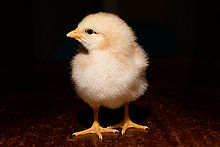
1 day-old chick
When people hear the name E. coli, even a passing familiarity brings about reactions of disgust and fear of food poisoning. This outright hatred of the common bacteria is, perhaps, a bit unwarranted, considering there are many different types of Escherichia coli. Not only are there harmful strains, but there are also many that are harmless to humans and some that are even helpful as well. We actually have our own E. coli that live in our intestines, take some of our nutrients and make essential vitamin K2 for us, which we cannot make for ourselves. Vitamin K is More >

Be nice to your plants, they might be sensing you
Jan 4th
Complex social behavior was considered to be unique in animals, especially humans. Now with recent findings, we may need to extend this ability to plants. The old wives tale, “if you talk to your plants, they will grow better” may actually have a string of truth to it. Except they don’t have ears to hear, they have chemical sensors in their roots, like “tongues in the earth.”
Recent studies have shown that plants seem to respond to other neighboring plants, and will alter their growth patterns accordingly. At McMaster University, Ontario Canada, Susan Dudley and Amanda File have demonstrated that plants More >
Malaria Mystery: SOLVED
Dec 15th
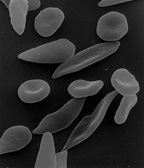
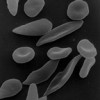
Normal and Sickled Red Blood Cells
While scientists have long known that carriers for Sickle Cell Trait are more resistant to Malaria infection, the mechanism by which protection is conferred has not been well understood—until now. Scientists at Heidelberg University used an electron microscope to observe what happens when the parasite that causes Malaria in humans, Plasmodium falciparum, infects red blood cells containing both healthy and mutant hemoglobin.
Scientists noticed that in red blood cells with healthy hemoglobin, the parasite hijacks the actin cytoskeleton to transport its own “adhesin” protein to the cell membrane. The adhesin, also called Plasmodium falciparum Erythrocyte Membrane Protein 1 More >

Ancient cave paintings, fact or fiction? Prehistoric Horse DNA Holds the Key
Nov 29th
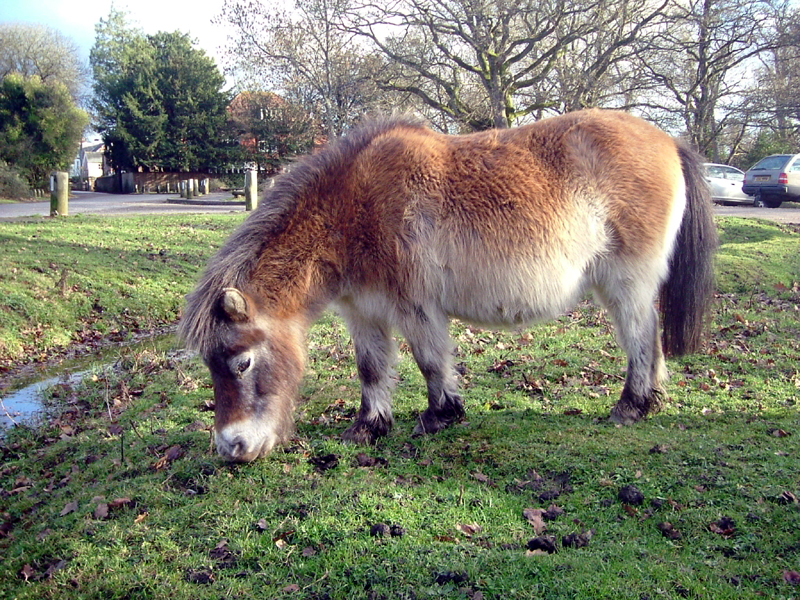
Pony with Pangare markings
Before the dawn of the written language, prehistoric humans began recording events from their daily lives and environment on the walls of their local caves. Now many of these cave paintings are treasured, priceless works of ancient history and art. Many different animals are represented in these paintings and about a third of them are horses. [1]
There has been much speculation about exactly which horse breeds existed when the painting of cave walls began about 25,000 years ago. Some of the types predicted included bays, grays and horses with dun colored coats with pangaré markings (tan coat with More >

The Secrets of Butterflies
Nov 8th
Butterflies are a timeless symbol of beauty and serenity, with their sweet graceful fluttering is enjoyed by people around the globe. But to “non-people,” or hungry animals, they are more often a source of food. Butterflies have almost no chance against birds and other faster predators. They tend to be slow flyers and many have vibrant colors that stand out in contrast to the flowers they choose to collect nectar from.
So why have they not succumbed to the pressures of natural selection? They are much tougher than they appear. Butterflies have three dominant defense mechanisms that have kept them safe More >
AIDS Cure UPDATE
Oct 15th
Back in February, I blogged about a patient who received a bone marrow transplant, from an HIV-immune donor, that cured both his leukemia and AIDS. I mentioned that while bone marrow transplants were impractical as a primary treatment for AIDS, I suggested that perhaps gene therapy tactics could be employed to achieve the same effect. For the first time, scientists at Sangamo BioSciences have shown that this may actually be possible.
HIV infects white blood cells by latching onto two protein receptors, CD4 and CCR5. Scientists noticed that people with a defect in the CCR5 gene (a 32-bp deletion) are incapable of More >

Glow Kitties for Disease Resistance
Oct 5th
Who would have known that a little glowing jellyfish would come to mean so much? In the 60’s and 70’s a Japanese scientist named Osamu Shimomura isolated a protein from the pacific jellyfish (Aequorea Victoria) that allowed the jellyfish to glow. This cylinder-shaped protein is now called Green Fluorescent Protein or “GFP.” Shimomura also uncovered the part of the GFP molecule that was responsible for its fluorescence. After this initial discovery, other researchers began to show an interest in the little glowing molecule, especially, Martin Chalfie and Roger Tsien.
Martin Chalfie began attaching GFP to gene promoters, hoping that GFP would More >

Can I Teach That?
Sep 21st
Recently I worked with a group of graduate students who volunteered to be science mentors for students in New York City. They were being trained in a small set of hands-on labs designed to introduce genetics in an engaging, informal environment. At some point during the training, we touched upon genetic mutations and variation. I mentioned that it was a perfect segway into discussion of natural selection and evolution. One participant raised her hand and asked, “Are we allowed to teach that?” My initial response was surprise. I said, “Of course!” It is unfortunate though, that as science educators we should even More >
Biological Warfare
Sep 15th
Scientists at the Universities of Nottingham and Maastricht have engineered a strain of bacteria that may be able to fight cancer!
Clostridium sporogenes are anaerobic soil dwellers which cannot survive in the presence of oxygen. Researchers have genetically modified these bacteria so that they produce an enzyme that activates a cancer drug. It turns out that the centers of solid cancer tumors contain very little oxygen. Researchers hope to inject cancer patients’ tumors with the engineered Clostridium spores, which would not survive in the rest of the oxygen-rich body. After a tumor is infected with the Clostridium, a patient would also be More >
Fine Food or Freak Fish?
Sep 27th
Science experiments are not usually meant to be eaten; even water and gum are strictly banned from laboratories. But as scientists continue to perfect techniques for genetic manipulation, the products of their experiments are increasingly making appearances in super markets and on dinner tables.
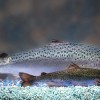
While the genetic modification of plants for human consumption is common in the United States (think corn and soybeans), genetically modified (GM) animals have yet to be approved. But now, a Massachusetts-based company, AquaBounty, is petitioning the FDA to sell genetically modified Atlantic Salmon to consumers.
Thanks to some genetic mix and match, the salmon, dubbed AquAdvantage, reach More >