DNA From The Beginning
Blood
Apr 9th
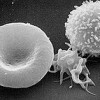
Within the human body we have 60,000 miles of blood vessels. We have three types of cells in the blood, red, white, and platelets. Red blood cells transport oxygen throughout the body while white blood cells help protect us against infection. Platelets are involved in clotting. When you get a cut your vessels send out signals calling for for platelets and proteins to help in clotting. In addition, white blood cells also come to the rescue. A blood clot is a group of chemicals and cells that work together to stop the flow of blood in a small area. All More >

Hibernation – Why Not Me?
Feb 16th
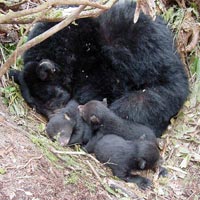
It’s the season of hibernation, something I’ve always wished I could do. Oh, to wrap up in a ball, sleep away the winter, and wake to a beautiful spring day – like Bambi! Although the thought has always intrigued me, it never really occurred to me what a feat hibernation actually is. It turns out that all of the bears, squirrels, rabbits etc…. that I thought were just sleeping, are breaking biological laws!! If I was to stay dormant for 5 months, without food or drink and little to no movement in freezing temperatures I would die, so no hibernating More >
Aging Eggs
Dec 20th
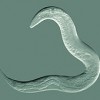
C. elegans Roundworm
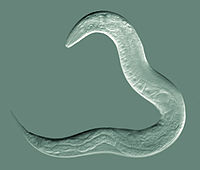
The aging process is, and always will be fascinating to us. It’s role in an organism’s ability to reproduce is currently being studied in worms at Princeton University. The microscopic roundworm C. elegans lives for about 21 days. For the first nine of these days, hundreds of eggs are fertilized producing an abundance of offspring! After day nine, the many remaining eggs won’t be used, as their quality is poor and they cannot produce viable embryos. A process similar to this takes place in humans. Women experience a sharp decline in fertility in their late 30’s. In worms and in humans More >
Bacteria and Antibiotics
Nov 11th
There are a number of various types of bacteria that naturally exist in our bodies and help us in different ways. Unfortunately, bacteria get a bad reputation. Most people are unaware of how important these organisms are. It is estimated that in a healthy person, there are about ten times as many bacteria cells as human cells! Fluctuations in the level of these bacterial cells can lead to problems such as digestive issues, skin problems, obesity, and more. It is important to think about the way bacteria cells function and evolve when we consider our own health.
If an individual becomes More >
Viruses
Oct 11th
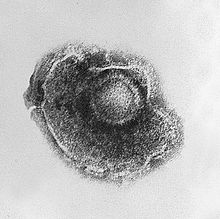
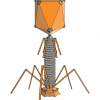
What do you think of when someone says virus? Most people would say infection, getting sick, germs, and other negative associations. Not only are viruses a valuable tool in research, they offer a look into history and also our own bodies. I’ve recently become a bit obsessed with learning more about them. Part of it is that I thought I knew more than I did. There is a huge amout of information just waiting to be uncovered. Too often we think we know something and it prevents us from learnng more. Even something simple like having the chicken pox…
I remember More >

Can I Teach That?
Sep 21st
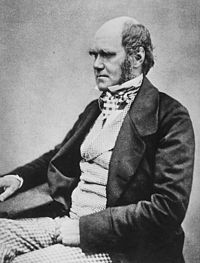
Recently I worked with a group of graduate students who volunteered to be science mentors for students in New York City. They were being trained in a small set of hands-on labs designed to introduce genetics in an engaging, informal environment. At some point during the training, we touched upon genetic mutations and variation. I mentioned that it was a perfect segway into discussion of natural selection and evolution. One participant raised her hand and asked, “Are we allowed to teach that?” My initial response was surprise. I said, “Of course!” It is unfortunate though, that as science educators we should even More >
Rhythm of the Night
Sep 8th
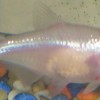
Circadian rhythms, or cycles of activity during a 24 hour period, are highly conserved across species. While we have much to learn about these daily patterns of life, scientists have found an organism that may offer new insight.
The timing of this internal clock is related to the amount of exposure to light. How do circadian rhythms work in organisms that are not exposed to light? A Somalian cavefish, Phreatichthys andruzzii, is a blind species that has been living without light for approximately 1.4 to 2.6 million years!
Researchers compared the cave fish to zebrafish during exposures to 12 hour period of More >
Taste Receptors in Lungs
Nov 11th
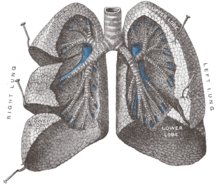
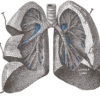
There are bitter taste receptors lining the smooth muscle that surrounds airway passages that lead to the lungs. These are the same receptors found on the tongue. It is well known that the ability to taste bitter has evolutionary benefits. For example, bitter tasting toxins can be detected in foods, and thereby avoided or at least regulated; meaning you won’t eat too much of something that tastes really bad!
Interestingly enough, inhalable toxins can be detected in airways, just like they would be on the tongue. The airway response to detection is what’s most interesting. One school of thought is that More >
Cockroach Brains as Medicine
Sep 22nd
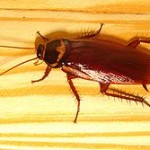
Each day your body works to defend you against invaders. Harmful bacteria, viruses, and fungi can enter your system and cause diseases. In addition to relying on your immune system, it is helpful to avoid contact with germs by thoroughly washing your hands and keeping your environment clean.
How is it possible that some organisms have the ability to survive in some of the dirtiest places on earth? What survival mechanisms do they have that differ from ours?
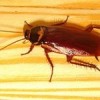
Scientists ground up the brains and other nerve tissues from two species of insects, the American cockroach and the desert locust. Material extracted from More >

Recycled DNA
Aug 25th
The majority of our DNA does not code for protein or RNA and does not seem to regulate how the information is used. Sometimes referred to as “junk” DNA, these regions make up about 98.5 % of our genome. Is this DNA really junk?
Scientists have recently identified a section of “junk” DNA that can regain function and cause disease. The section of DNA is made of repeat regions of the same sequence. They found that individuals who have 1-10 repeats on the end of chromosome 4 can develop one of the most common forms of muscular dystrophy, FSHD. The goal now is More >